Could smart drainage planning protect your yard while opening useful outdoor space? In Knoxville, installed pricing commonly falls between $20 and $50 per square foot. Many homeowners set aside $3,500 to $10,000 for professional construction, based on size, materials, site access, grading, and drainage needs.
Erosion, unstable slopes, and poor runoff can place stress on your home and property. Strong structural design helps control soil, guide water, and create level space for patios, gardens, or walkways.
Knoxville Concrete Company is operated by Anchored Construction & Restoration. We serve homeowners, businesses, and light industrial clients across Knoxville and nearby communities.
Our experienced in-house crews manage site preparation, construction, cleanup, and surface restoration. This turnkey process keeps your project organized from planning through completion. We focus on durable materials, proper drainage, and careful workmanship.
Key Takeaways
- Installed pricing commonly ranges from $20 to $50 per square foot.
- Many homeowners budget $3,500 to $10,000.
- Site conditions, drainage, materials, and access affect pricing.
- Strong construction helps control erosion and unstable slopes.
- Knoxville Concrete Company provides complete in-house service.
How Much Does a Retaining Wall Cost in Knoxville, TN?
Knoxville pricing depends on the size, design, and demands of each property. National figures offer useful planning guidance, but local site conditions can shift the final quote.
Typical Pricing Per Square Foot
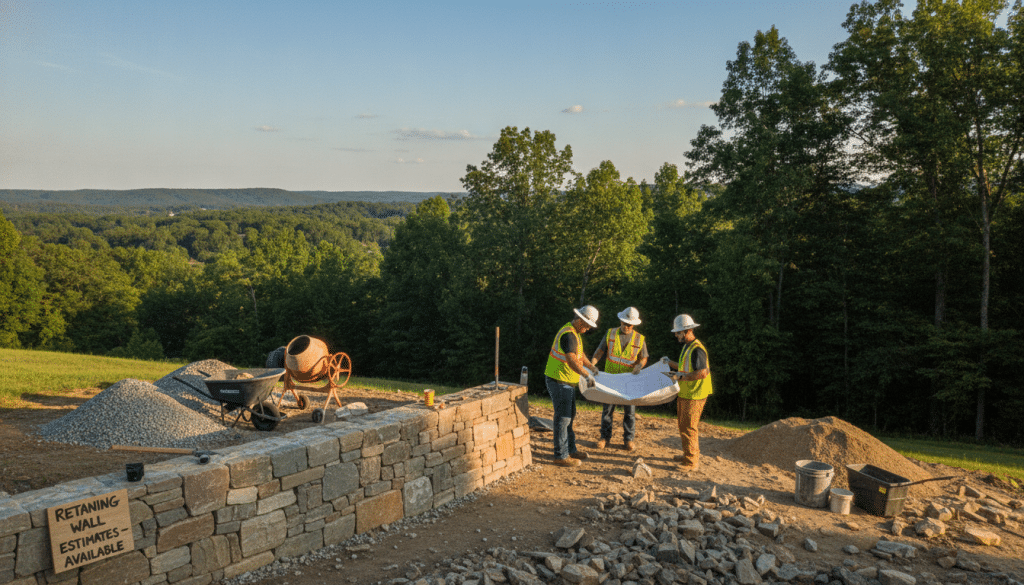
National rates often range from $20 to $53 per square foot, with an average cost near $33. Homewyse listed professional installation at $35.41 to $48.62 per square foot in May 2026.
Begin with length multiplied by exposed height. For example, 6 feet by 7 feet creates 42 square feet. That scope may fall near $840 to $2,226 before excavation, drainage, or engineering.
Average Project Pricing for Knoxville Homeowners
The national average is $6,300, while typical projects range from $3,500 to $9,400. Small work may reach about $1,200. Large installations can approach $13,700.
- Basic scope: simple access and limited grading
- Mid-range scope: drainage, excavation, and durable finishes
- Complex scope: steep grades, engineering, or difficult access
We use these figures for budgeting only. Knoxville Concrete Company reviews soil, access, drainage, materials, and grade before preparing an accurate estimate.
What Determines Retaining Wall Cost in Knoxville?
Every Knoxville project starts with different ground conditions and structural goals. Dimensions, access, drainage, labor, materials, and purpose all shape the final price.
Material, Labor, and Project Scope
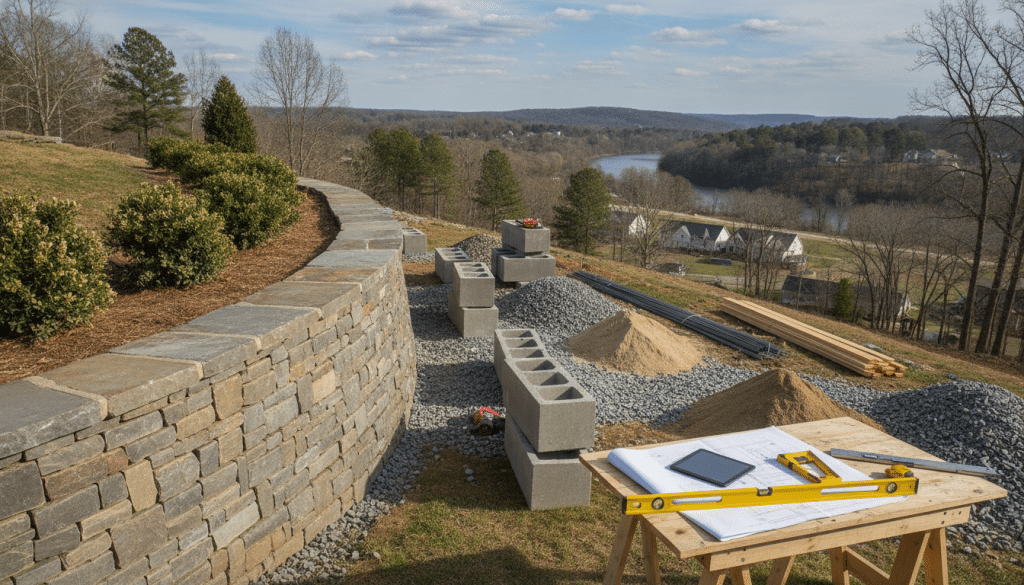
Small landscape borders need less work than structures supporting slopes near foundations. Concrete or block materials, reinforcement, forms, and finish details also affect the estimate. Site preparation may include leveling at $0.40 to $2.00 per square foot. Grading often starts near $500, while excavation runs $50 to $200 per cubic yard.
Property Conditions and Local Pricing
Clay-heavy soil holds water and adds pressure behind the structure. This ground may require drainage, stabilization, deeper excavation, or reinforcement. Waterproofing commonly adds $2 to $10 per square foot. Costs vary when access is tight or the slope needs protection during construction.
Our in-house crews coordinate every phase, including excavation, dirt work, grading, drainage preparation, forms, reinforcement, concrete placement, cleanup, and landscape restoration. This turnkey process keeps materials, labor, and site protection organized from start to finish.
Retaining Wall Cost by Project Size
Project dimensions give homeowners a useful starting point for planning. We measure total area by multiplying length by exposed height. This figure helps explain pricing, yet soil, access, drainage, and site preparation still shape each estimate.
Typical area examples include:
- 42 square feet: $840 to $2,226 for limited scope and favorable access.
- 175 square feet: $3,500 to $9,275 for many mid-size projects.
- 350 square feet: $7,000 to $18,550 when excavation and drainage needs increase.
Garden and landscape walls under 3 feet tall, spanning 20 to 40 feet, often range from $2,000 to $6,000. Structural slope walls measuring 3 to 5 feet tall and 30 to 60 feet long commonly reach $6,000 to $15,000. These structures may need deeper bases, geogrid, engineering, and added excavation.
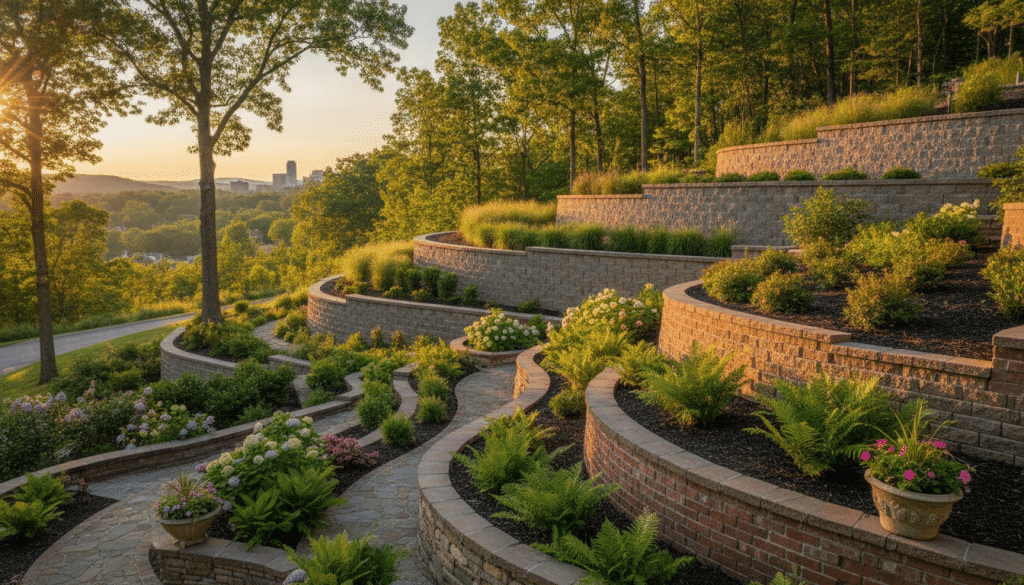
Two- or three-tier terraced systems often run $12,000 to $25,000 or more. Longer retaining walls may lower the unit rate because equipment and setup expenses spread across greater footage. We review the full project area before presenting clear wall costs.
Retaining Wall Cost by Material
Material choice shapes durability, appearance, drainage needs, and final pricing. Knoxville Concrete Company reviews slope height, soil pressure, site access, and expected service life before recommending materials.
Concrete Block and Interlocking Blocks
Segmental concrete blocks typically run $20 to $35 per square foot installed. Interlocking blocks suit many residential yards because they offer visual flexibility and strong support. With proper base preparation and drainage, quality blocks can last more than 50 years.
Poured Concrete and Concrete Masonry
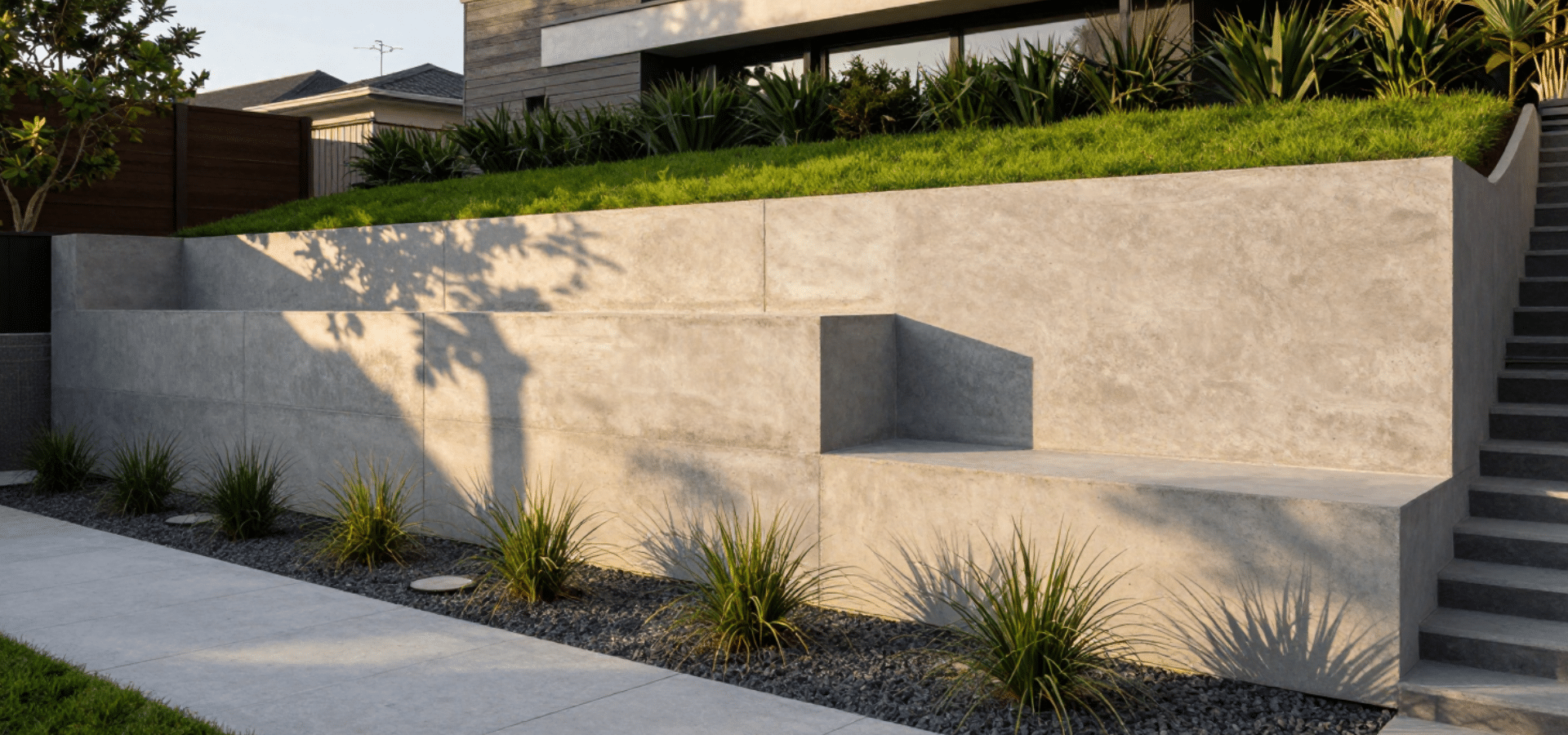
Poured concrete commonly costs $25 to $40 per square foot installed. This type works well for taller designs and clean, modern lines. It can also last more than 50 years when crews build stable forms, reinforcement, and drainage into the project.
Natural Stone, Timber, and Boulder Walls
Natural stone runs about $30 to $50 per square foot, though national pricing may reach $90. Boulder walls range from $25 to $45 and blend well with wooded lots. Pressure-treated wood costs $15 to $25 but often lasts only 15 to 20 years.
- Best value: interlocking blocks with proper preparation
- Premium look: natural stone or boulders
- Long service: poured concrete and durable block systems
We help clients select the right type based on drainage, maintenance, appearance, and long-term performance.
How Wall Height Affects Retaining Wall Costs
Wall height strongly influences structural needs and the final retaining wall cost. Taller walls hold back greater soil pressure, so they often need deeper bases, stronger reinforcement, and careful drainage planning.
- 2 feet: $40 to $80 per linear foot
- 3 feet: $60 to $120 per linear foot
- 4 feet: $80 to $180 per linear foot
- 5 feet: $120 to $250 per linear foot
- 6 feet: $180 to $350 per linear foot
Structures above 4 feet often require engineering, permits, deeper excavation, and geogrid reinforcement. These steps help protect homes, yards, driveways, and nearby property from soil movement.
For instance, six-foot walls may need four or five geogrid layers extending 6 to 8 feet behind the face. Terracing can offer another solution. Two shorter walls may reduce pressure, improve drainage, and create useful planting or seating areas.
We review grade, soil, drainage, and nearby structures before recommending wall height. This approach supports safe construction and clearer project pricing.
Labor and Site Preparation Costs
The ground beneath your project often sets the pace for preparation. Labor costs cover more than final installation. They may include demolition, excavation, dirt work, grading, base preparation, material handling, forms, reinforcement, cleanup, waste removal, and restoration.
Excavation, Grading, and Dirt Work
Leveling typically costs $0.40 to $2.00 per square foot. Grading usually starts near $500. Excavation ranges from $50 to $200 per cubic yard when crews must remove, relocate, or dispose of substantial soil. These labor costs reflect equipment time, soil volume, access, and site protection.
Forms, Reinforcement, and Concrete Installation
Poured concrete and concrete masonry require compacted bases, accurate forms, and careful installation sequencing. Rebar installation often adds $1.50 to $2.50 per square foot. These steps support strength and help control long-term costs.
Knoxville Concrete Company uses in-house crews for the complete building retaining process. We coordinate demolition, excavation, grading, forms, reinforcement, concrete installation, cleanup, and landscape restoration. One detailed scope helps homeowners compare labor and project costs without overlooking essential preparation.
How Soil and Drainage Affect Wall Cost
Water movement beneath your property can shape structural needs before construction begins. Clay soil holds moisture and creates added pressure behind the wall. This condition can increase erosion risks and raise retaining wall costs.
Managing Clay Soil and Erosion
Drainage failure remains the number-one cause of retaining wall failure. Gutters, slopes, and groundwater patterns may direct water toward the build area. Early planning helps limit erosion and supports durable results.
Waterproofing commonly adds $2 to $10 per square foot. French drain installation may range from $1,650 to $12,250, based on length, access, and discharge needs.
Drainage Aggregate, Filter Fabric, and Piping
A complete drainage plan may include:
- Clean aggregate behind the wall
- Filter fabric to limit soil migration
- Perforated pipe, weep holes, and discharge piping
Knoxville Concrete Company coordinates drainage, grading, construction, cleanup, and landscape restoration through one turnkey process. Our in-house crews prepare the soil correctly and build for long-term performance. This complete approach helps control erosion while giving homeowners clearer project costs.
Permits and Engineering for Knoxville Retaining Walls
Local approval helps protect your property and supports sound construction. Knoxville retaining walls over 4 feet often require a building permit, stamped engineering drawings, reinforcement planning, and inspections.
In many jurisdictions, officials measure height from the footing bottom to the wall top. Confirming this detail early can prevent delays. Permit fees commonly range from $40 to $450, based on the municipality and project scope. Engineered drawings may add $500 to $1,500.
The permit process may include plan review, footing inspection, and final inspection. These steps verify drainage, reinforcement, setbacks, and structural safety. They also reduce code concerns that could affect insurance or future property sales.
- Define height, length, materials, drainage, and site access.
- Confirm whether the permit requires stamped plans.
- Schedule footing and final inspections when required.
- Keep permit records with project documents.
Unpermitted structural work can create costly questions during a home sale. We help coordinate permit needs, engineering details, inspections, and construction planning. This clear process gives property owners stronger oversight and a dependable retaining wall cost estimate.
Retaining Wall Types and Their Installation Costs
Structural design should match soil pressure, available space, height, drainage, and long-term use. Each type handles ground movement in its own way. We review these conditions before building retaining systems in Knoxville, TN.
Gravity and Segmental Block Walls
Gravity structures rely on mass to resist soil pressure. They typically range from $10 to $30 per square foot and suit many shorter applications. Segmental blocks use interlocking units. Crews may add geogrid when soil needs extra resistance.
These systems require compacted base material, filter fabric, drainage aggregate, and proper grading. Concrete masonry offers flexible finishes while supporting durable landscape solutions.
Cantilever, Anchored, and Reinforced Walls
Cantilever designs use reinforced concrete and broad footings. Pricing commonly falls between $25 and $30 per square foot. Anchored systems use tie-backs for taller structures or tight property lines. Counterfort designs range from $15 to $25, while sheet piling runs $10 to $50 per square foot.
- Best for height: cantilever or anchored systems
- Best for shorter slopes: gravity or block construction
- Longest service: poured concrete can last up to 100 years
We coordinate drainage, reinforcement, excavation, and concrete placement through complete in-house service.
How Location and Site Access Change the Price
Project location can shape pricing as much as length or height. Landscape placement often ranges from $30 to $150 per linear foot. Slope placement may reach $40 to $200, while backyard work can range from $33 to $255. Driveway placement commonly falls between $38 and $138 per linear foot.
Limited access may raise labor needs by about 15% to 25%. Narrow gates, steep grades, fences, utilities, and nearby structures can restrict equipment movement. Knoxville properties with challenging terrain may need smaller machines or manual material handling across longer distances.
Our estimate reviews the available area, drainage routes, landscaping, staging space, and protection needs. Each location calls for careful preparation before construction begins.
- Driveway projects may need traffic control and surface protection.
- Backyard work may require hand transport through narrow passages.
- Slope work can need staged excavation and smaller equipment.
- Foundation areas demand utility checks and careful soil control.
Knoxville Concrete Company uses in-house crews for material handling, site protection, excavation, cleanup, and restoration. This turnkey support helps us manage difficult walls while protecting your yard and surrounding area.
Additional Features and Restoration Costs
Thoughtful finishing touches can turn an outdoor structure into useful living space. Steps connect different elevations, while seat caps, lighting, and planting beds bring function and style to your yard.
Steps, Seating, Lighting, and Landscape Integration
Integrated features may add $1,000 to $5,000. The range depends on construction details, electrical work, drainage, and landscape design. These options can create safer access, comfortable seating, and attractive garden zones.
Water control may need extra planning. French drain installation commonly ranges from $1,650 to $12,250 when runoff requires a dedicated outlet.
Cleanup, Waste Removal, and Surrounding Site Restoration
After building, restoration may include soil redistribution, path repairs, grading, sod replacement, and waste removal. New sod commonly costs $0.87 to $1.76 per square foot. Land clearing runs about $735 to $2,330 per acre.
- Remove construction debris and excess soil
- Repair paths and protect nearby planting
- Regrade and restore disturbed yard areas
Knoxville Concrete Company provides turnkey support from building through final cleanup. Our in-house crews restore surrounding landscape areas and leave each retaining wall site orderly, safe, and ready for use.
DIY Retaining Wall Installation vs. Hiring a Contractor
Small landscape projects can suit skilled homeowners, yet structural work needs careful judgment. A garden barrier under 2 feet may work on level, well-drained ground when you have proper tools and know effective soil compaction.
DIY materials often run $4 to $20 per square foot. Equipment, delivery, excavation, drainage, safety gear, and debris removal add to the final bill. One listed tool example totals about $157 before gravel, blocks, timber, or other supplies.
Professional service costs roughly $20 to $53 per square foot, but experienced crews manage grade, drainage, reinforcement, and site protection. This support can save time and limit costly errors.
- Choose expert help for structures over 3 feet.
- Request guidance for clay soil or poor drainage.
- Use professional crews near foundations, steps, or curves.
- Confirm permits and engineering needs before work begins.
Weak drainage may cause blocks to shift, lean, or fail within two to three years. Rebuilding failed retaining walls can cost more than hiring qualified professionals at the start. We provide in-house support for durable, well-planned results.
Can a Retaining Wall Increase Home Value?
A well-designed retaining wall can improve your home by adding function, structure, and visual appeal. It can control erosion, define planting zones, and make a sloped yard easier to use. This upgrade may also strengthen the landscape around your home.
Some market data suggests home value may increase by up to 15%. This figure is not guaranteed. Results depend on construction quality, local buyer demand, neighborhood standards, and the project’s connection to the home.
- Level space for patios, gardens, paths, or seating
- Improved drainage that helps protect the home from runoff
- Cleaner landscape design with defined planting areas
- Durable materials that support long-term home appeal
Terraced construction can turn an unusable slope into outdoor living space. Proper drainage also helps limit soil movement near the foundation. We support lasting value through careful preparation, attractive landscape integration, clean restoration, and documented workmanship. These features can make the yard more useful while giving the home a polished, functional setting.
Choosing a Knoxville Retaining Wall Contractor
Clear communication can prevent surprises before site work begins. Choose an experienced contractor who explains each phase, confirms site needs, and supports the project from planning through cleanup.
Why In-House Crews and Turnkey Support Matter
Knoxville Concrete Company is operated by Anchored Construction & Restoration. Our in-house crews manage demolition, excavation, dirt work, grading, drainage preparation, forms, reinforcement, debris removal, and restoration.
This turnkey process keeps each task connected. It can reduce delays, improve communication, and protect surrounding surfaces. We also provide one-year workmanship warranty coverage for added confidence after wall installation.
What to Look for in an Estimate
Request written details before approving work. A strong estimate should list:
- Dimensions, materials, excavation depth, and base design
- Drainage, reinforcement, disposal, restoration, and payment terms
- Schedule, warranty terms, and site protection measures
Homewyse lists May 2026 installation pricing at $35.41 to $48.62 per square foot. General supervision may add 13% to 22%. Compare each scope carefully because site-specific needs vary. For an estimate, call (865) 316-6933 or email info@knoxvilleconcretecompany.com.
Conclusion
Good planning turns slope concerns into firm, usable ground for your home.
Installed retaining wall pricing usually ranges from $20 to $50 per square foot. National data places average cost near $6,300, while soil, height, drainage, access, engineering, and preparation shape final cost.
Your written scope should identify design, installation steps, drainage, reinforcement, cleanup, restoration, and warranty coverage. One example may list block selection, pipe placement, grading, and surface repair. Another example may show schedule, payment terms, and inspection needs.
- Our in-house crews build durable retaining wall systems.
- We coordinate concrete work, landscape walls, drainage, and restoration.
- Turnkey support keeps your project organized from start to finish.
- Our 1-year workmanship warranty supports lasting value.
Knoxville Concrete Company, operated by Anchored Construction & Restoration, serves Knoxville, TN, and nearby areas. Call (865) 316-6933 or email info@knoxvilleconcretecompany.com to discuss your home and request pricing from an experienced contractor.
